Showing posts with label books. Show all posts

26.12.25

The Ten Best Books I Read in 2025

For the 7th year in a row, I'm posting the ten best books that I read in 2025. I'm posting them in the order that I read them, regardless of publication date or preference within the Top Ten. I've been thinking a lot this year about the virtues of re-reading books. As the years go by, it seems more likely that I will find enjoyment and wisdom in re-reading something that I've loved before, rather than another new read. This however, is a bit of a challenge in making a book list, since I could easily have a Top Ten that were books that everyone already knew were great. So, there is a bit of fudging on that front, but hopefully the list finds the median between true and interesting.

Declare by Tim Powers

This was a recommendation from Doug McKelvey that I actually finished just before January 2025, but I had already put out the 2024 list. It's an epic mid-20th century European espionage novel with an original twist. As I understand it, it is strict history (in so far as it's known for all people and events) overlaid with a battle of great spiritual forces filling in the gaps that are the key to understanding global events. It's the kind of story I hadn't ever really imagined, much less read.

The Anxious Generation by Jonathan Haidt

Like many people, I read this and then found myself talking about it to everyone for the rest of the year. Surely I'm not done yet. Haidt does a great job talking about technology and social media and the mental illness epidemic. He's well-researched and practical. In addition to that, he opens the discussion on another aspect of current childhood life that few people are talking about, namely the lack of unsupervised free play and the way that creates anxiety by limiting opportunities for kids to learn how to navigate risk. I've learned a lot, and grown in my gratitude to get to raise my kids at Kibuye.

Surrender by Bono

I don't do a lot of audiobooks (not having a commute), but I slowly worked my way through this on occasional car trips to Bujumbura, and I'm so glad I chose the audiobook. Bono is (obviously) a fantastic reader, and there are song clips and various near-dramatizations throughout. Turns out he's as poetic a writer as he is lyricist. What can I say? He's a fascinating guy, and a deep dive into his life story is worth it on many levels.

War and Peace by Leo Tolstoy

I love the great Russian novels, and this is arguably the last giant I had never read. It was already on deck when my teammate Sam confided (independently from me) that he was wanting to read it, so the experience was richer for chances to get together and chat about it. It's famously epic, which means the deep character profiles, world events, and long story lines that Tolstoy does so well. It seems like the gift of Russian literature to the world is a full view of what it means to be human.

He [God] is not to be apprehended by reason, but by life.

...the despairing vehemence with which people bewail disasters they feel they have themselves caused.

Not the Way It's Supposed to Be: A Breviary of Sin by Cornelius Plantinga

Ben Roose brought this to Kibuye, and I realized that I had read (and remembered) an essay by C. Plantinga on addiction and sin over twenty years ago, and still remembered it. "A book about sin" sounds boring, and it might be if it wasn't so well-written and so crazy insightful. I don't know what else to say. Just sample some quotes:

We ought to pay evildoers, including ourselves, the “intolerable compliment” of taking them seriously as moral agents, of holding them accountable for their wrongdoing.

[we live] in a culture that teaches him that we are our own creators. A person who has succumbed to an addiction thus imagines a derisive question coming at him from his culture: What kind of moron creates but cannot control himself?


Since faith fastens on God’s benevolence, it yields gratitude, which in turn sponsors risk taking in the service of others. Grateful people want to let themselves go; faithful people dare to do it. People tethered to God by faith can let themselves go because they know they will get themselves back.

Yumi and the Nightmare Painter by Brandon Sanderson

2025 was kind of the year of Brandon Sanderson in the McLaughlin house. I don't usually go in for the long epic fantasy (with the obvious exception of the next book in this list), but I read three stand-alone Sanderson novels this year, and they were all great. His imagination and world-building is just skillful and fun. His plot turns can be complicated, but he knows how much explanation the reader needs. "Yumi" is the story of two-worlds inexplicably linked, and it stays interesting until the end.

Return of the King by JRR Tolkien

I (re)read aloud all three Lord of the Rings books this year with Toby. I doubt anyone will read this and say "Never heard of that! Maybe I should check my local library." But I'd be lying if I didn't say this was one of the best I read this year. Interestingly, in Roald Dahl's Matilda, little precocious Matilda reads Tolkien and asks the librarian for "more like that". Matilda is disappointed with all the other fantasy books. Then the librarian gives her War and Peace, and Matilda exclaims that that's exactly what she was looking for. At the very least, Tolkien is still in a class of his own.

Sam saw a white star twinkle for a while. The beauty of it smote his heart, as he looked up out of the forsaken land, and hope returned to him. For like a shaft, clear and cold, the thought pierced him that in the end the Shadow was only a small and passing thing: there was light and high beauty for ever beyond its reach… Now, for a moment, his own fate, and even his master’s ceased to trouble him.


Wonder makes the words of praise louder.

Candle Island by Lauren Wolk

Wolk's Beyond the Bright Sea made this list in 2021. Alyssa brought Candle Island  to Kibuye, and I loved it. The setting is an island community in Maine. The main character is reminiscent of Gary Schmidt's protagonists in terms of being way more mature than any twelve-year old I know, but somehow that doesn't bother me at all. The characters and the setting would have been enough, but it's got some great plot twists as well. It's enough to make me go and read anything else Wolk has written.

Souls of Black Folk by W.E.B. Du Bois

Years ago, in a webinar that hosted my friend Jeff Liou, there was a question to an expert panel about a good book to read to understand American race relations. Someone suggested The Souls of Black Folk, and I've been thinking about it since then. Published in 1903, I expected interesting history (the Civil War being still in relatively recent memory) and some enduring wisdom. I got that (including a new appreciation for my native Nashville's Fisk University), but what I didn't expect was a beautiful and poetic voice.

How curious a land is this, - how full of untold story, of tragedy and laughter, and the rich legacy of human life; shadowed with a tragic past, and big with future promise!

The human spirit in this new world has expressed itself in vigor and ingenuity rather than in beauty.

The Night Circus by Erin Morgenstern

This debut novel was a re-read for me, and it's been a family favorite for several years. The story of two magicians' contest to train up the better protégé results in a truly unforgettable setting. Everything about La Cirque de Rêves makes you desperately want to go there. If Morgenstern never produces another masterpiece, she's at least go this one.

Honorable Mentions

Tress of the Emerald Sea by Brandon Sanderson

Remember Death by Matt McCullough

Sunrise on the Reaping by Suzanne Collins

The Mind of the Maker by Dorothy Sayers

The Monk of Mokha by Dave Eggers

Ghost, Patina, Sunny, Lu (series) by Jason Reynolds

Zero at the Bone by Christian Wiman

Orthodoxy by GK Chesterton (re-read)

Three Days in June by Anne Tyler

The Chosen by Chaim Potok (re-read)

Reading Genesis by Marilynne Robinson

The Miracles of Christ by David Redding


2025 Newbery Medal Winner: 

The First State of Being by Erin Entrada Kelly

Continuing Rachel and I's longstanding tradition of reading and ranking every Newbery Medal winner, this year's winner is Erin Entrada Kelly's second win, continuing to reinforce our belief that, if you win twice, one will be notably better than the other. This is the good one. Honestly, it could have been Top 10, but wanted to vary it up. The story is set on the even of Y2K (which is fun nostalgia for us), and then the characters get a visitor from the future. Super fun. I like to read the runners-up to see if I agree, and this year I also read Across So Many Seas, which was good, but I think the right choice was made.

26.12.24

The Ten Best Books I Read in 2024


For the sixth year running (see below for the past five years), I enjoyed reflecting on the best books I read in the past year, regardless of the year of their publication. 4 novels, 4 non-fiction books, a collection of poetry, and a graphic novel biography. That probably represents my reading fairly well. 

Per usual, the ten books will be followed by a list of honorable mentions and a comment on this year's Newbery Medal winner. Then I'm adding a category for "Best Re-Read", since I don't really know how to rank re-reads, since if it was good enough to read again, it's probably usually a top ten read.


Pay Attention, Carter Jones by Gary Schmidt

Gary Schmidt has appeared in these lists more than any other author, so I'll continue to bang my drum, arguing that he may be the best living author of young adult books. And my family generally agrees. I read three of his books this year, and this was my favorite. Per the normal, a bright young protagonist finds his way through family struggles via a wise mentor and some cultural artifact, in this case, the game of cricket and other Britishisms. It was the usual brilliant mix of sad, clever, hilarious and redemptive. And it made Toby and Ben and I want to go watch a cricket match last August in Bath with our friend Simon.


Lorna Donne by RD Blackmore

This is one of the great forgotten novels of the last few centuries, with most people thinking Lorna Doone is (only) a shortbread cookie. The story is a sprawling adventure romance in southwest England a few centuries ago when the land was threatened by bandits but upheld by deeply-rooted ordinary goodness and humility. In the end, like most novels of its era, it's mostly about its characters. This was the last book that my good friend James Paternoster recommended to me, and I'm thankful to have had the chance to discuss it with him before his passing. 


The Stranger: Meditations on the Christ by Ben Palpant

This collection of poems was left at Kibuye by Glory Guy, and it was only after I read it that I realized I knew the poet's mom, who used to live in Kenya. The poems are structured in groups following the life of Christ, even if you have to work at it sometimes to find the connection. It took me a while to get into the "rhythm" of his style, but once I did, I found myself often reading the poems to Rachel or the kids. Sometimes there was a particular reason for that, but sometimes you just want to share a good poem.

Moments like these
He rests his oars
And rides the rolling waves. 


The Ruthless Elimination of Hurry by John Mark Comer

This may be the book on this list that I keep coming back to the most in my thoughts. Comer is wise and he's very funny and easy to read. This particular read is extremely necessary for our world. A number of the points he makes were ones I had already given a lot of thought to, but he fleshes them out practically, and his focus on slowness was very welcome.


The End of the Christian Life by J. Todd Billings

I'm in the middle of reading my third book this year about death and the Christian life, and it has brought me strange comfort and focus. But that seems to be the message of all three of these books, that thinking well about death is key for thinking well about life. This was probably my favorite, recommended by Matthew Loftus for its tension of Death the enemy and Death the friend.


Lifting the Veil by Malcolm Guite

I've been enjoying Guite's poems for a few years now, but this is the first time I've read anything else of his. It's a short book, brought to my attention by fellow Serger Bob Phillips in the Netherlands. Guite's main point (in my opinion) is that imagination provides a way of knowing and understanding that is additive to reason and rationality, but that Christian faith has misunderstood and de-emphasized this role of imagination. Appropriate to his subject matter, Guite leans heavily on some beautiful artistic examples, and now I'm eager to go back to William Blake again.


The Samurai by Shusaku Endo

Since reading Silence a few years ago, I've been eager to read more Endo, but interestingly, it seems nigh impossible to find ebooks of his works, and thus I've been limited in Burundi. However, this summer while in the UK, Bob Heppe had several of his novels, and I was glad to borrow what is often considered Endo's greatest masterpiece. Like Silence, The Samurai is set is set in the 17th century as Japan is clamping down on Christianity. The plot is thick and the characters are deep. The hope that is offered is beautifully subtle, which of course, can make you imagine that hope is just about anywhere.


The Faithful Spy by John Hendrix

Last year, I wrote about Hendrix as the cartoonist for The Holy Ghost. He has done a number of graphic novel biographies, and I also enjoyed his new one on Tolkien and Lewis this year. The Faithful Spy is about Dietrich Bonhoeffer, particularly about how this German pastor got caught up in a plot to assassinate Hitler. Fascinating, and both very well told and well drawn.


The Medieval Mind of CS Lewis by Jason Baxter

I've read several books about the disenchantment of the world, and they describe that part fairly well. But when they get to the re-enchantment part, they have seemed rather, well, disenchanting. How to re-enchant the modern world? Fiction is certainly an important piece of this, but this book provides a pretty great non-fiction piece, as Russell Moore suggested in his recommendation of Baxter's book. I've read a lot of Lewis this year, and this book is a great exploration of how Lewis was shaped by a medieval world view. But more generally, the book is quite good at describing how the medieval mind viewed an "enchanted" world, providing some great food for thought on a different way to see the world all around us. 


The Poisonwood Bible by Barbara Kingsolver

When we moved to Africa fifteen years ago as missionaries, this was a major cultural connection point for a lot of people. "Have you read the Poisonwood Bible?" Rachel had read it, but I never had. It's really a fantastic novel. Sweeping, complex story, and fantastic characters. It has its own take on Africa and US involvement in Congo, but it's not essentially anti-Christianity or even anti-missionary. Even though the story didn't feel much like our experiences of Africa, some of the superficial descriptions of Congo felt pretty similar to Burundi.

Honorable Mentions:

The Weight of Glory by CS Lewis (re-read)
Baking Cakes in Kigali by Gaile Parkin
How Far to the Promised Land? by Esau McCaulley
A Burning in My Bones by Winn Collier
Midnight's Children by Salman Rushdie
The Lost Art of Dying by Lydia Dugdale
The Eyes and the Impossible by Dave Eggers
I Cheerfully Refuse by Leif Enger
Just Like That by Gary Schmidt
The Many Assassinations of Samir, Seller of Dreams by Daniel Nayeri
The Mythmakers by John Hendrix

2024 Newbery Medal Winner:


The Eyes and the Impossible by Dave Eggers

Having read and ranked all the Newbery Medal winners, Rachel and I make a point to read the new one every year. This year's book is a great story, and Dave Eggers is an amazing author. But it is a surprising choice, because it's really just kind of a nice story from the imaginative perspective of a dog. Hard to understand why this was selected above all others, but it is a good read.

Best Re-Read in 2024:


A Severe Mercy by Sheldon Vanauken

Rachel and I read this for the first time over fifteen years ago, and I've often wondered if I would still appreciate it now. After visiting Oxford this summer, it seemed like a good time to re-read it. Vanauken tells the story of his love for his wife, their adventures together, their unlikely conversion to Christianity while studying at Oxford, their friendship with CS Lewis, and the grief of losing his wife at a young age. It's still beautiful and wise. 

30.12.20

The 10 Best Books I Read in 2020


For the second year in a row, I kept a list of all the books I read in 2020.  Just like last year, this affords me the opportunity here at the end of the year to look back and recognize my ten favorites.  


1. A Grace Disguised by Jerry Sittser
This was actually the first book I read in 2020.  It was recommended by a guy at MTI in 2018 as an incredible book on suffering, and it is indeed that.  Jerry Sittser lost his mother, wife, and daughter in the same accident with a drunk driver.  His reflections on suffering are profound.  I keep coming back to this quote I've already used multiple times in 2020 (here and here): "Sorrow is noble and gracious.  It enlarges the soul until the soul is capable of mourning and rejoicing simultaneously, of feeling the world's pain and hoping for the world's healing at the same time."  I can't think of many ideas more important for the world of 2020.


2. To Kill a Mockingbird by Harper Lee
Like everyone else, I read (and enjoyed) this in high school, but that was a long time ago.  Harper Lee nailed it.  Beautiful story, characters, and style.


3. Just Mercy by Bryan Stevenson
There is a bit of irony with me placing this one after Harper Lee, but for me, it's just a chronological coincidence.  Stevenson's story about getting an innocent man off death row, along with his general overview of the injustices (racial and otherwise) of the American legal system, is incredibly compelling.  The stories and his descriptions of the issues are engaging.  Stevenson's voice is distinctively and richly Christian.  It's a voice that the church and the world both need, and I'm so glad he's out there testifying.


4. The Wednesday Wars by Gary Schmidt
This book was the 2008 Newbery runner-up to Good Masters! Sweet Ladies! Voices from a Medieval Village, which was actually also a great book.  So, I'm not debating the difficult choice there, but The Wednesday Wars was certainly Newbery Medal-worthy.  The book moves from one vignette to another, any of which would have been worthy of a climax.


5. The End of the Affair by Graham Greene
Ever since falling in love with the darkly-redemptive The Power and the Glory about twenty years ago, I've been searching for another Greene novel that captures the same beauty.  This is a very close second.  Greene's psychological dissection of how a modern heart AND mind encounters Christianity from the outside as well as the inside often plays a peripheral role in his story, but it comes into center focus here.


6. Plaidoyer Pour La Vie by Denis Mukwege
Dommage that this book doesn't yet have an English translation.  Nobel Peace Prize laureate Dr. Denis Mukwege has been working tirelessly for women who are victims of sexual violence in nearby Bukavu, DR Congo.  He is also a graduate of the University of Burundi.  His heroic efforts have put his life under constant threat.  As an autobiography, Plaidoyer Pour la Vie gives Dr. Mukwege a chance to talk openly about his faith and his life growing up among medical missionaries.  Incredible story.


7. Silence by Shusaku Endo
This book was surprisingly hard for me to find (there appears to be no Kindle version?), and I haven't seen the Scorsese film with Liam Neeson.  It is a story of deep struggle and seemingly lost faith in the era of Catholic missionaries to Japan.  The characterization is made in the intro that Shusaku Endo is a kind of Graham Greene for Japan, and I can see that.  The story is as beautiful and deep as it is heartbreaking.  I will be reading more by Endo.  "Sin, he reflected, is not what it is usually thought to be... Sin is for one man to walk brutally over the life of another and be quite oblivious of the wounds he has left behind.  And then for the first time a real prayer rose up in his heart."


8. The Contemplative Pastor by Eugene Peterson
This is simply a practical gem.  Peterson talks about how contemplative living is necessary for good living, but we treat is as peripheral.  Which is true for pastors and everyone.  Thus, this is a book about getting life and work right.  His image of the pastor as the Melville "man with the harpoon" while everyone else in the boat is rowing, so that he can strike well in the opportune moment, is a durable metaphor.  "...the faithful endurance that is respectful of the complexities of living a moral, spiritual, and liturgical life before the mysteries of God in the mess of history."  I know that's a sentence fragment, but what a fragment.


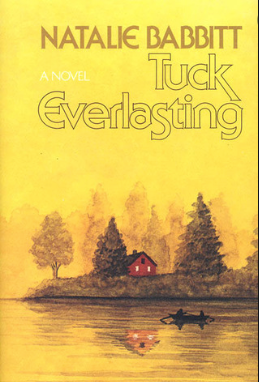
9. Tuck Everlasting by Natalie Rabbit
I'm surprised I never read this as a kid.  The story of the immortal Tucks and all its implications is married perfectly with Babbit's style.


10. Virgil Wander by Leif Enger
Enger's prior novel made my list last year, so that tells you something of my evolving opinion of him as a novelist.  Virgil Wander is the wonderfully quirky story of a small town on the north shore of Lake Superior, MN.  It feels magical, but it's really not.  It feels redemptive, but also ordinary.  Which is great.

BONUS: Newbery 2020 Reflection:  We continue to read and rank the Newbery Medal winners every year.  Now our kids are getting into it, which is fun.  Next year will be the 100th year, so we're looking forward to that.


2020 Newbery Medal: New Kid by Jerry Craft.
This is a great graphic novel about a black kid who starts at a new elite school where he struggles with being a person of color in a very white world.  The story and the illustrations both work really well, and all our kids enjoyed the book.  It's funny and nuanced.  The odd thing is that it's a graphic novel.  Our impression is that the Newbery Medal went to a story that could stand alone without its illustrations (thus having excluded past greats from Brian Selznick like Hugo Cabret and Wonderstruck).  Apparently not.

2.1.20

The 10 Best Books I Read in 2019


This year, I decided to keep a list of the books that I read.  The primary advantage of this was not knowing how many books I read (which I imagine would just encourage the reading of short books, thus missing out on some great long reads), but rather a chance to look back and consider the best books that I encountered.  So, because sharing a good read is always a worthy task, I give you the 10 best books I read in 2019 (in the order that I read them, not as a ranking).

1. Born a Crime by Trevor Noah.  
Trevor's storytelling is not only hilarious, but incredibly valuable as a way to see race relations up close and personal, but (since he's mostly talking about South Africa) not so personal that you can't hear what he's saying.
 

2. The Sacrifice of Africa by Emmanuel Katangole.  
I love reading Africans who are way smarter than me, and Katangole is a joy in that regard.  This Ugandan priest tackles the question of why the Christianization of Africa hasn't transformed African societies like it seems that it should have.  The positive examples that he gives are tremendous, and his treatment of the subject is brilliant.

3. So Brave, Young, and Handsome by Leif Enger.  
Though the title rings of a paperback romance, this beautiful novel is simply a great, American adventure story.

4. Culture Making by Andy Crouch.  
My favorite quote from this one: "What is most needed in our time are Christians who are deeply serious about cultivating and creating but who wear that seriousness lightly - who are not desperately trying to change the world but who also wake up every morning eager to create.  The worst thing we could do is follow that familiar advice to "pray as if it all depended on God, and work as if it all depended on you."  Rather, we need to become people who work as if it all depends on God - because it does, and because that is the best possible news."

5. On Loving God by Bernard of Clairvaux.  
I love being able to read words from 900 years ago, and find them so relatable even today.  A short book that anyone can download for free.  "We must know, then, what we are, and that it is not of ourselves that we are what we are.  Unless we know this thoroughly, either we shall not glory at all, or our glorying will be vain."

6. Cry the Beloved Country by Alan Paton.  
This is the only book here that was a re-read for me.  I loved it the first time, but wanted to re-read it prior to heading to South Africa this summer.  There is simply a beautiful mix of poetry, story, and social concern woven throughout that is hard to find replicated elsewhere.


7. The Snow Child by Eowyn Ivey.  
I loved Ivey's At the Bright Edge of the World last year, and so I thought I would read Ivey's first book, which had been a finalist for the Pulitzer.  They are both Alaskan novels (which makes it a bit special for me, I suppose), and they both have a wonderful magical realism.


8. Ready Player One by Ernest Cline.  This one is thanks to Rachel.  I hear there is a movie, but haven't seen it.  The novel, at any rate, is about as fun as dystopia can get.


9. The Golden Key by George MacDonald, illustrated by Ruth Sanderson.  Diane Telian gave us this one.  The story is a typically beautiful fairy tale from MacDonald.  The illustrations from Sanderson are gorgeous and worth hanging on a wall to ponder.  The whole story can be read in a couple hours, preferably on a lazy Sunday afternoon, where it's beauty can be properly and leisurely enjoyed.


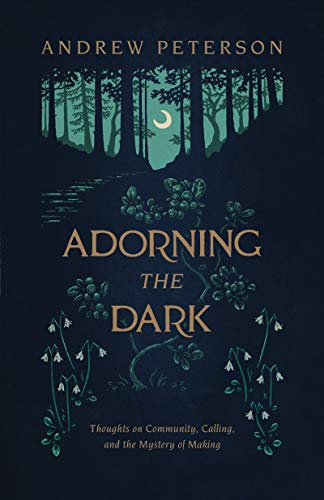
10. Adorning the Dark by Andrew Peterson.  I've been trying to decide whether this book would have the same appeal for someone who is not a long-time Andrew Peterson fan like myself.  I'm still not sure, but the book is certainly more than a fan read.  Peterson has fantastic wisdom for the creative process in the world, which it turns out, touches most of our relationships.


BONUS:  Given Rachel and I's longtime goal of reading all the Newbery medal winners and ranking them, we can say a word here at the 2019 winner Mercy Suarez Changes Gear.  Nice story, fairly typical coming of age tale, this time set in a fun Cuban-American family in Florida.  Though it beats Hello Universe from the year prior, it's hard to see what made it stand out to win the medal.  Hoping for something great in 2020.

18.6.17

2016 & 2017 Newbery Thoughts

As longtime readers know, we have made it a hobby to read all the 90+ Newbery medal winners and give our unsolicited opinion.  Click here for our ranking.  The books keep coming, so we keep giving our thoughts.

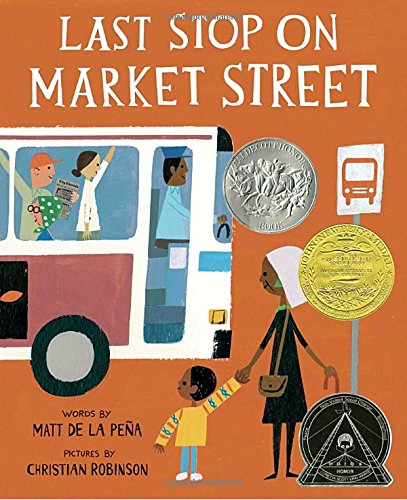
2016:  January 2016, Last Stop on Market Street won the Newbery Medal.  It was a shock.  It's a read-aloud picture book, utterly unable to be compared to other books.  Sometimes, Newberys have been short (e.g. Sarah, Plain and Tall), but a total read-aloud is a new precedent.  As you can see on the cover here, it not only won the Newbery for best story, but also a honor for the Caldecott for its illustrations (which are fantastic).  Was it good enough for the Newbery?  It's good, but it's not great, and so it was a very confusing choice.
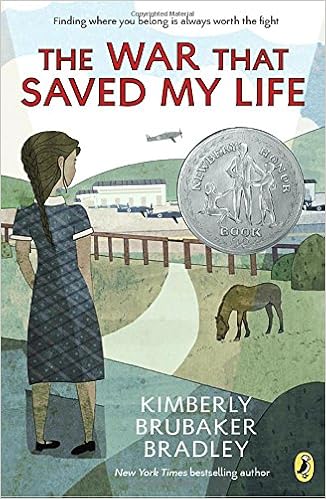
One reason for the confusing choice could have been a lack of competition.  We also happened upon one of the 2016 Newbery Honor books, The War That Saved My Life.  It's a World War II story about a young handicapped girl that is sent out of London during the blitz, and it's fantastic.  Absolutely on par with some of the better medal winners throughout the year.

Thus we have the Newbery motto for 2016:  "What in the world is going on?"

***

As an aside, roughly twice a decade, the Newbery medal departs from a standard novel to honor a book written in some other literary style, poetry, free verse, hip-hop rap, or the occasional non-fiction work.  Last Stop on Market Place seems to be one of these times.  Though we are generally fans of a fantastic tale more than anything else, these occasional departures have usually impressed us.  The Crossover, Good Masters! Sweet Ladies!, and Joyful Noise: Poems for Two Voices are some examples.

***

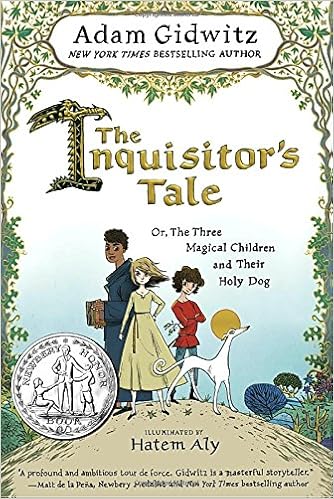
2017:  Because of our 2016 experience, we were eager to see the follow-up.  We procured a copy of the winner, The Girl Who Drank the Moon as well as the most-appealing Honor book The Inquisitor's Tale.  


Verdict:  Both Awesome.  The Girl Who Drank the Moon is 100% fantasy with truly original characters and a compelling style.  The Inquisitor's Tale is an imaginative yarn out of the Middle Ages that is sometimes silly, sometimes serious, always fun and always wonderfully illustrated.  Very difficult to know which of these two deserved the Medal.  They are both Medal quality.

Newbery Motto for 2017:  Back on Track.